
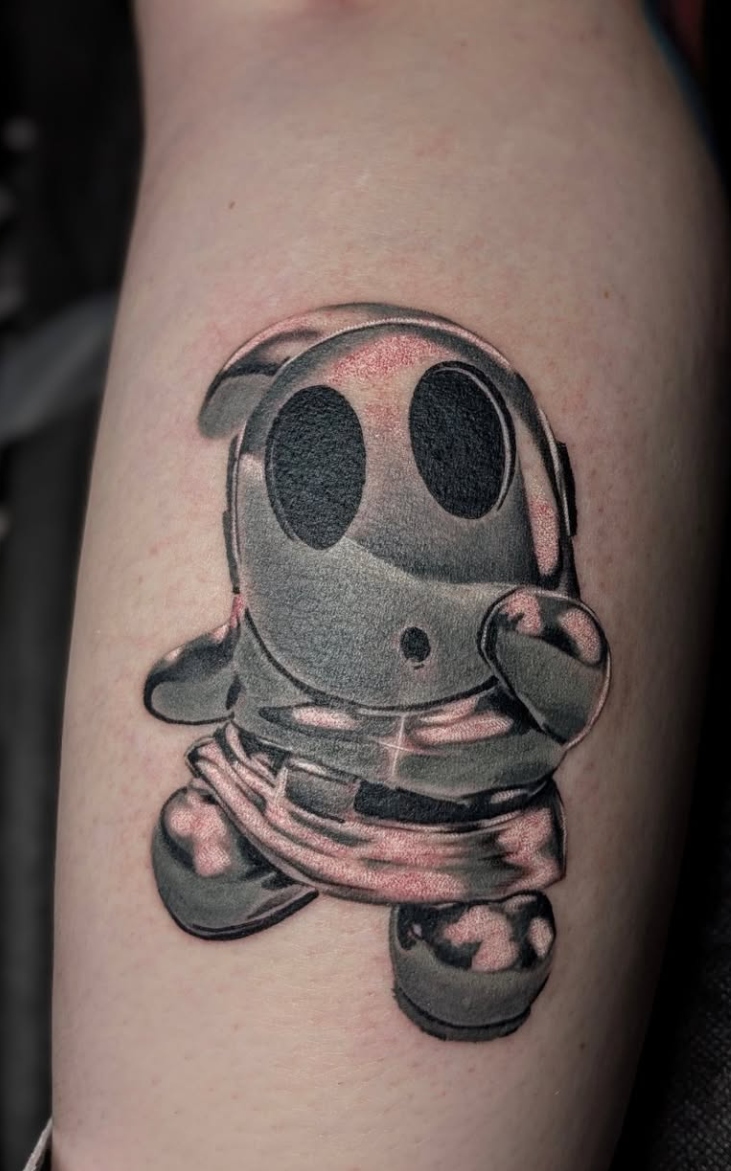
Your artist spent six hours on that piece. The next four weeks decide how much of that work survives.
Healing is the part of the process that is entirely in your hands, and it is also where most of the damage happens. Faded patches, blown out lines that were crisp on day one, and lost detail are usually not tattooing failures. They are healing failures.
The good news is that the correct routine is simpler than the internet suggests. Most aftercare advice fails by adding steps rather than removing them.
The Healing Timeline, Realistically
A tattoo is an open wound made of thousands of tiny punctures. It heals in overlapping phases, and the surface finishes long before the skin underneath does.

Days 1 to 3: the open wound phase
Expect redness, swelling, warmth, and tenderness. The tattoo will weep a mix of plasma, lymph fluid, and excess ink. That fluid is normal and it is supposed to come out. Some of the ink coming off is ink that was never going to stay.
If you were sent home in a second skin bandage, fluid pooling under it is expected. Follow whatever timeline your artist gave you for removal rather than a timeline you read somewhere else.
Days 4 to 6: the itching starts
The surface begins to dry and tighten. This is when flaking starts and when the itch becomes genuinely annoying. The tattoo may look slightly dull. That is normal.
Days 7 to 14: peeling
The tattoo peels like a sunburn, and the flakes carry pigment with them, which alarms nearly everyone the first time. Colored flakes are dead skin holding surface ink, not your tattoo leaving.
This is the highest risk window. Picking a flake off early pulls pigment out of the skin underneath it and leaves a light patch that will need a touch up.
Days 15 to 30: the milky phase
The surface is closed but the tattoo looks slightly hazy or cloudy, as though it is under a thin film. It is. A new layer of skin has formed over the pigment and has not yet become fully transparent. Do not panic and do not start troubleshooting.
Weeks 4 to 8: settling
The haze clears and the tattoo starts to look like the piece you paid for. Lines sharpen. Contrast returns.
Months 2 to 6: full maturity
The deeper layers finish remodeling. A tattoo is generally considered fully healed around the two to three month mark for most work, and heavier pieces with dense saturation or extensive color can take longer. Large scale work is often not fully settled until four to six months.
Practical implication: do not judge your tattoo before week six and do not schedule a touch up before then either. Most of the things people want touched up at week three resolve on their own.
The Aftercare Routine, Stripped to Essentials
Three things, done consistently, cover almost every case.
1. Wash it, gently, twice a day
Clean hands first. Lukewarm water, a fragrance free mild soap, fingertips only. No washcloths, no loofahs, no scrubbing. Rinse thoroughly and pat dry with a clean paper towel rather than a bath towel, which harbors bacteria and catches on flakes.
2. Moisturize thin, not thick
A very light layer of a fragrance free lotion or a purpose made tattoo balm, two to three times a day. Thin enough that the tattoo looks matte rather than shiny.
This is the most common mistake in all of aftercare. A thick layer suffocates the wound, traps bacteria and moisture against it, and can cause the tattoo to heal poorly or break out in small pimples. More ointment is not more healing.
3. Leave it alone otherwise
No picking, no scratching, no peeling flakes that are still attached. If the itch is unbearable, tap the area through clothing or apply lotion. Do not pull anything off that has not released on its own.
What to Avoid, and For How Long
| Avoid | How long |
|---|---|
| Submerging it: pools, hot tubs, lakes, baths, the river | Until fully closed, usually 2 to 3 weeks |
| Direct sun on the fresh tattoo | Until fully closed, then sunscreen forever |
| Sweating heavily: hard workouts, saunas | About a week, longer for large pieces |
| Tight clothing over the area | Until peeling finishes |
| Shaving over it | Until fully healed |
| Petroleum heavy ointments, thick layers | Throughout |
| Alcohol, hydrogen peroxide, antibacterial ointments | Always, unless a doctor says otherwise |
| Picking, scratching, exfoliating | Always |
| Fragranced lotions and scented soaps | Until healed |
Showers are fine from day one. It is submerging that is the problem, because standing water is not sterile and prolonged soaking softens the healing surface.
The San Antonio Problem: Heat, Sweat, and Sun
Generic aftercare advice is written for milder climates. Here it needs adjusting, and this is the main reason we see healing complications locally.

Sun is the single biggest long term threat
UV breaks down tattoo pigment permanently. This is not about fading over decades, it is about fading noticeably within a few years, and it hits black and grey work and fine line work hardest because both depend on contrast and thin lines.
On a fresh tattoo, sun exposure on unhealed skin is a burn on an open wound and can cause real damage. Keep it covered with loose clothing rather than sunscreen while it is still healing, because sunscreen should not go on an open wound.
Once healed, SPF 30 or higher on the tattoo any time it is in daylight, indefinitely. This is the single highest return habit for keeping a tattoo looking like it did in the healed photos.
Sweat is a practical problem
San Antonio summers make "avoid heavy sweating for a week" harder than it sounds. Rinse with plain water after you have been sweating, pat dry, and reapply a thin layer of lotion. Salt sitting on a healing tattoo is an irritant.
Swimming is the one that gets people
Rivers, lakes, pools, and hot tubs all carry bacteria, and a healing tattoo is an open door. This is worth taking seriously for the full two to three weeks. A float trip the weekend after a new tattoo is how people end up with an infection.
Products: What Is Worth Buying
You need very little.
Fragrance free mild soap. A basic unscented bar or liquid soap is fine. You do not need a tattoo branded cleanser.
A light fragrance free lotion or tattoo balm. Purpose made tattoo balms are genuinely good and pleasant to use. A plain unscented lotion also works. What matters is that it is fragrance free and that you apply it thinly.
Sunscreen, SPF 30 or higher. The one product worth being particular about, and the one you will use for the rest of the tattoo's life.
That is the list. Aftercare kits with six products are selling you five products.
We stock the balms and aftercare we actually use and recommend in our store, and your artist will tell you what your specific piece needs before you leave.
When to Be Concerned
Normal healing involves redness, swelling, warmth, tenderness, clear or slightly cloudy fluid, flaking, and itching.
See a doctor if you have any of these:
- Redness that spreads outward from the tattoo, especially in streaks
- Swelling that increases after the first few days instead of decreasing
- Heat radiating from the area, or pain that worsens over time
- Thick yellow or green discharge, or a foul smell
- Fever or chills
- A rash across the tattoo, which may indicate a reaction rather than an infection
Infections are uncommon with good aftercare and a clean shop, but they are a medical issue and not something to resolve by asking a forum. Call us too, so we know, but see a doctor.
Touch Ups
Wait until at least six weeks, ideally eight, before assessing whether anything needs attention. Most concerns at week three are the milky phase and resolve on their own.
Light spots caused by picking, or areas that did not retain saturation, are normal on some skin and in some placements, particularly hands, feet, elbows, and knees, which resist retention no matter how well the work was done.
Ask your shop about their touch up policy before you book, not after. Ours is part of the conversation up front.
Aftercare for Larger Projects
If you are working through a sleeve or a back piece across multiple sessions, healing becomes a scheduling input rather than an afterthought.
Sessions on adjacent areas should be spaced so the previous area has closed before the next one begins, generally two to four weeks minimum, longer for heavy saturation. Trying to compress that timeline produces worse healing and a worse finished piece.
This is one reason we quote large work as a single project rather than per session. When the project is priced and financed as a whole, the pace is set by your skin instead of your paycheck, which is exactly how it should be. The full explanation is in our payment plans guide.
Ask Us Anything While It Heals
Final Touch Tattoo is the highest rated tattoo shop in San Antonio, with award winning artists, and we have been nominated as the best tattoo shop in San Antonio every year we have been open. Every client leaves with written aftercare and a human to call.
If something looks wrong at day nine, send us a photo before you start experimenting. It is usually nothing, and finding out it is nothing is free.
Contact us · Aftercare products · Book your next session
Final Touch Tattoo, 227 E Cevallos St, Suite 202, San Antonio, TX 78204. (210) 248-9682.
Frequently Asked Questions
How long does a tattoo take to heal?
The surface typically closes in about two to three weeks, with peeling finishing around day fourteen. Full healing of the deeper layers generally takes two to three months, and large or heavily saturated pieces can take four to six months to fully settle.
How do I take care of a new tattoo?
Wash gently twice a day with clean hands and a fragrance free mild soap, pat dry with a paper towel, apply a very thin layer of fragrance free lotion or tattoo balm two to three times a day, and otherwise leave it completely alone. Avoid submerging it and keep it out of direct sun until it is fully closed.
Is it normal for a tattoo to peel and lose color?
Yes. Peeling starts around day seven and the flakes carry surface pigment, which looks alarming but is dead skin rather than your tattoo. Do not pull flakes off early, because that removes pigment from the skin underneath and creates light patches.
Why does my tattoo look cloudy or faded after two weeks?
That is the milky phase. A new layer of skin has formed over the pigment and has not yet become fully transparent. It typically clears between weeks three and six. Do not judge the tattoo or book a touch up before then.
Can I go swimming after getting a tattoo?
Not until it is fully closed, usually two to three weeks. Pools, hot tubs, lakes, and rivers all carry bacteria and a healing tattoo is an open wound. Showers are fine immediately.
What should I put on a healing tattoo?
A fragrance free lotion or a purpose made tattoo balm, applied thinly. Avoid thick petroleum based ointments, alcohol, hydrogen peroxide, antibacterial ointments, and anything fragranced. Thin layers, not thick ones.
Does sun damage tattoos?
Yes, permanently. UV breaks down pigment, and it hits black and grey and fine line work hardest because both rely on contrast. Keep a fresh tattoo covered with clothing rather than sunscreen, and once healed use SPF 30 or higher any time the tattoo is in daylight. In San Antonio this matters more than almost any other aftercare habit.
When should I get a touch up?
Wait at least six to eight weeks so the tattoo has settled and the milky phase has cleared. Most things people want touched up at week three resolve without intervention.
How do I know if my tattoo is infected?
Spreading redness, swelling that worsens after the first few days, radiating heat, increasing pain, thick yellow or green discharge, a foul smell, or fever. Those warrant a doctor. Clear fluid, flaking, itching, and mild redness in the first days are normal.