
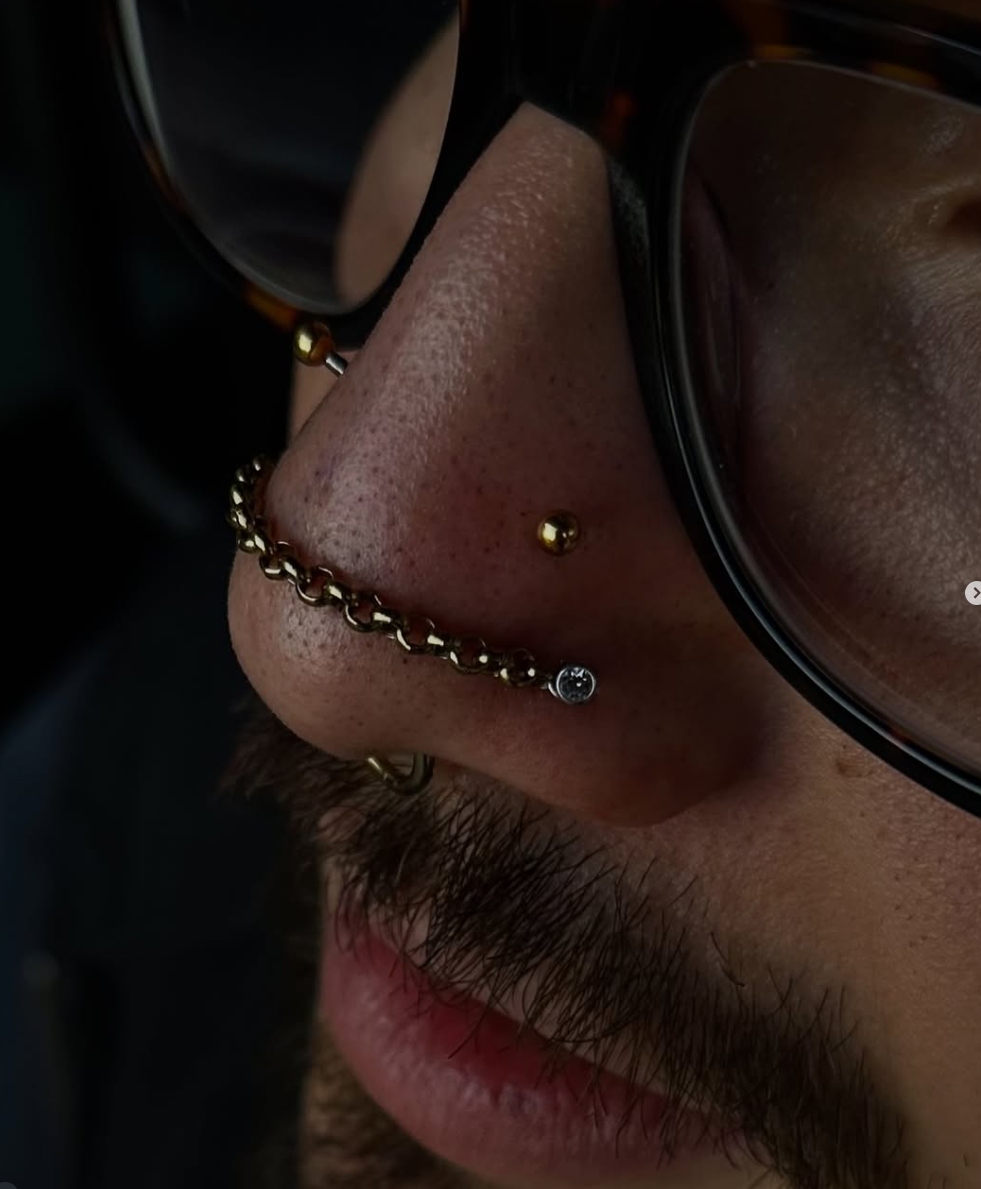
A piercing takes about four seconds. The decision about where to get it takes most people about four minutes, which is roughly four hundred times less consideration than they would give a haircut.
That imbalance is why so many people in San Antonio end up dealing with an irritation bump for eight months, a lobe that healed crooked, or a cartilage piercing that never settled down and eventually had to come out.
The piercing itself is the easy part. Everything that determines whether it heals cleanly happens before the needle and after you walk out.
The Two Things That Actually Decide How a Piercing Heals
Strip away the aesthetics and there are only two variables that matter.
What goes through your skin. A sterile single use needle, or a device that pushes blunt jewelry through with force.
What stays in your skin. Metal that is certified for implantation in the human body, or metal that is certified for nothing at all.
Get both of those right and most piercings heal uneventfully. Get either one wrong and you are managing a problem for months. Everything else, placement, jewelry style, aftercare routine, matters only after those two are settled.
Needles Versus Guns, and Why This Is Not a Debate
There is a common assumption that piercing guns are a faster version of the same thing. They are not the same procedure at all.
The Association of Professional Piercers states that only sterile disposable equipment is suitable for body piercing, and that APP members may not use reusable ear piercing guns for any type of piercing procedure (Association of Professional Piercers).
The reasoning is specific and worth understanding.
Guns cause blunt force trauma
A piercing gun uses pressure to force a pointed object, most often the jewelry itself, through the skin. Because that object is very dull compared to a quality piercing needle, the result is more tissue damage, with effects similar to blunt force trauma including significant pain, swelling, scarring, and increased potential for complications (APP Procedure Manual).
A needle is hollow and sharp. It removes a small channel of tissue cleanly. A gun stud tears its way through and crushes what it does not tear.
Guns cannot be sterilized
During a piercing, microspray of body fluids can aerosolize and contaminate the surface of a gun, meaning reusable guns can put clients in direct contact with the blood and body fluids of previous clients. Few gun piercing establishments possess an autoclave, the equipment necessary to sterilize them (APP Procedure Manual).
Most guns contain plastic components that would not survive an autoclave in the first place. Wiping the outside with alcohol does not address the internal mechanism.
Guns get used where they should never be used
Even though many manufacturers' instructions and local regulations prohibit piercing anything other than the earlobe, gun operators frequently use them on ear cartilage, nostrils, navels, eyebrows, and tongues, which the APP describes as inappropriate and dangerous (APP Procedure Manual).
Cartilage is the worst case. It has a poor blood supply, which means it heals slowly and punishes trauma. A crushed cartilage piercing can stay angry for a year.
The APP's own Piercee's Bill of Rights puts it plainly: piercing guns are never appropriate, and are often dangerous when used on anything, including earlobes (Association of Professional Piercers).
The Jewelry Question, Which Matters More Than People Realize
Here is the part that costs people the most time and comfort, and almost nobody asks about it.
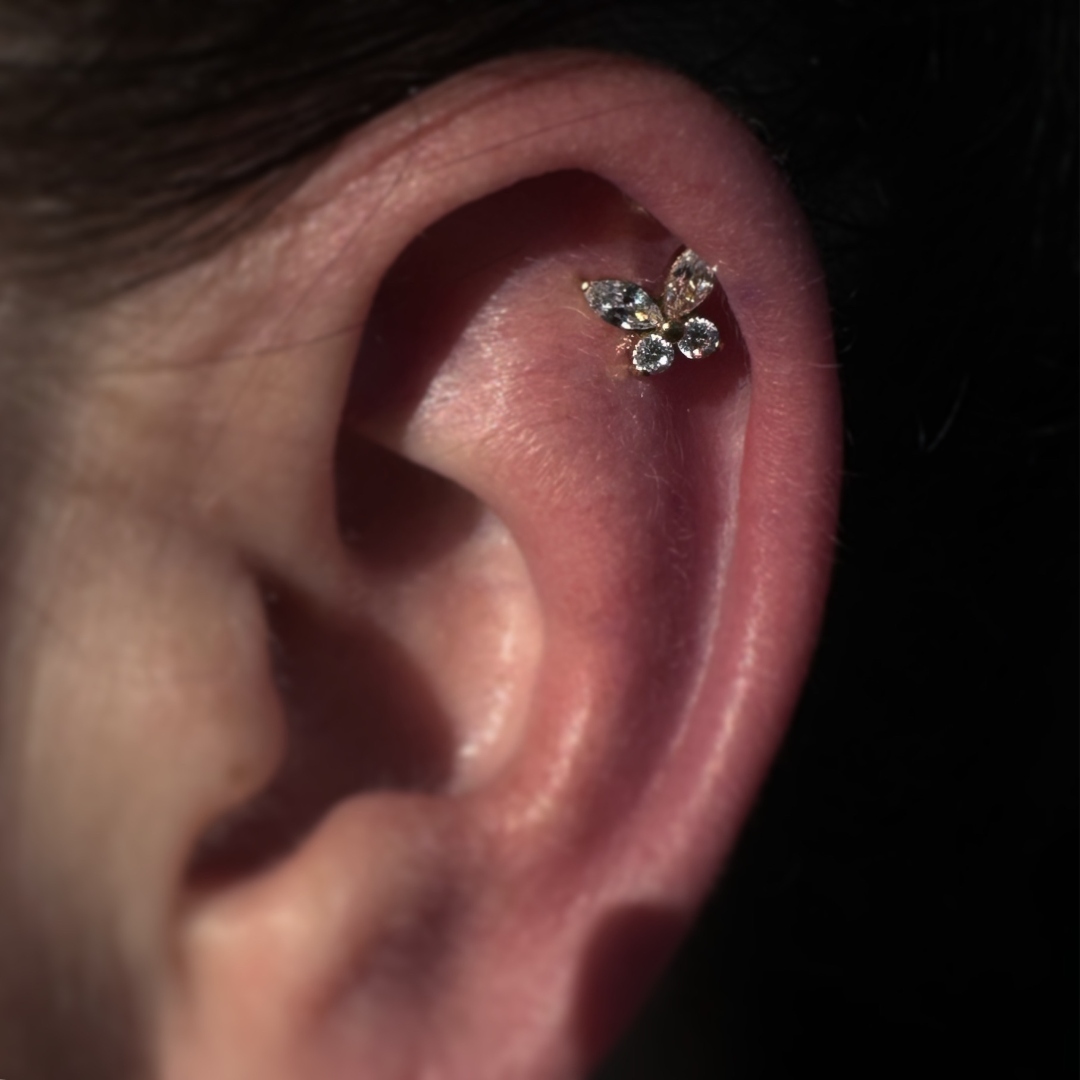
"Surgical steel" is a marketing phrase
There is no formal definition or standard behind the term surgical steel. It gets applied to cookware and doorknobs as readily as to body jewelry (Lynn Loheide). It carries no legal definition under US or EU medical device regulation, and what is sold under that name is typically 316L stainless, which contains somewhere in the range of 10 to 14% nickel (Poli International).
Nickel is a known sensitizer, affecting roughly 10 to 15% of people with reactions ranging from mild irritation to contact dermatitis (Alibaba supplier guidance). Putting that in an open wound for four months and hoping is not a plan.
Implant grade titanium is an actual specification
ASTM F136 is the specification for wrought Ti-6Al-4V ELI titanium alloy used in surgical implants. It defines exact chemistry, purity, and mechanical properties, including strict limits on oxygen, nitrogen, carbon, hydrogen, and iron. It contains no nickel (Poli International).
The ELI part stands for extra low interstitial, meaning the trace gases left in the metal are held to tighter limits, which keeps the alloy tough and resistant to cracking (Mods Body).
This is the same class of material used in hip replacements, dental implants, and spinal fusion hardware. When you ask for implant grade titanium, you are asking for metal manufactured to the standard that bone screws are held to.
Grade 23 on a label is not the same as certified
This is a subtlety worth knowing because it is how a lot of cheap jewelry gets sold as premium. Grade 23 is the designation for the nominal alloy composition, but only material that has actually passed ASTM F136 or ISO 5832-3 testing is truly implant grade. Without a mill certificate stating F136 compliance you have composition without proven metallurgical performance (Poli International).
The APP requires that initial jewelry be certified implant grade, backed by a certificate of compliance (APP, The Point).
What to ask, in one sentence
Ask your piercer: what material is this and what ASTM or ISO standard does it meet. A studio that stocks genuine implant grade jewelry answers immediately and specifically (PierceNow).
If the answer is "it's titanium" or "it's surgical steel," you have your answer, and it is not the one you want.
How Long Piercings Actually Take to Heal
Most people badly underestimate this, then change their jewelry too early and restart the clock.
Piercings heal from the outside in, so they can look finished on the surface while the tissue inside is still knitting together.
| Piercing | Initial healing | Full healing |
|---|---|---|
| Earlobe | 6 to 8 weeks | 2 to 3 months |
| Cartilage, including helix, tragus, conch, rook, daith | 3 to 6 months | 6 to 12 months |
| Nostril | 2 to 3 months | 4 to 6 months |
| Septum | 6 to 8 weeks | 3 to 4 months |
| Navel | 6 to 9 months | |
| Nipple | 6 to 12 months |
Ranges compiled from APP aligned guidance (APP Benelux, Poli International) and clinical sources (Sutter Health).
Two things follow from that table.
If you are specifically after lobes, helix, tragus, conch, rook, or daith work, we go deeper on those in our ear piercing guide.
Cartilage is a commitment. A helix is not an earlobe with a different address. It can take a year to fully mature and it does not forgive rough handling. If you want several cartilage piercings, staging them over time is easier on you than doing them all at once.
Do not change your jewelry early. Nostril piercings need a minimum of four to six months before any style change, and cartilage sits at six to twelve (Poli International). The surface feeling fine is not the signal.
Anatomy Decides What Is Possible, Not Pinterest
This is the conversation that separates a piercer from an operator, and it is worth understanding before you walk in with a screenshot.
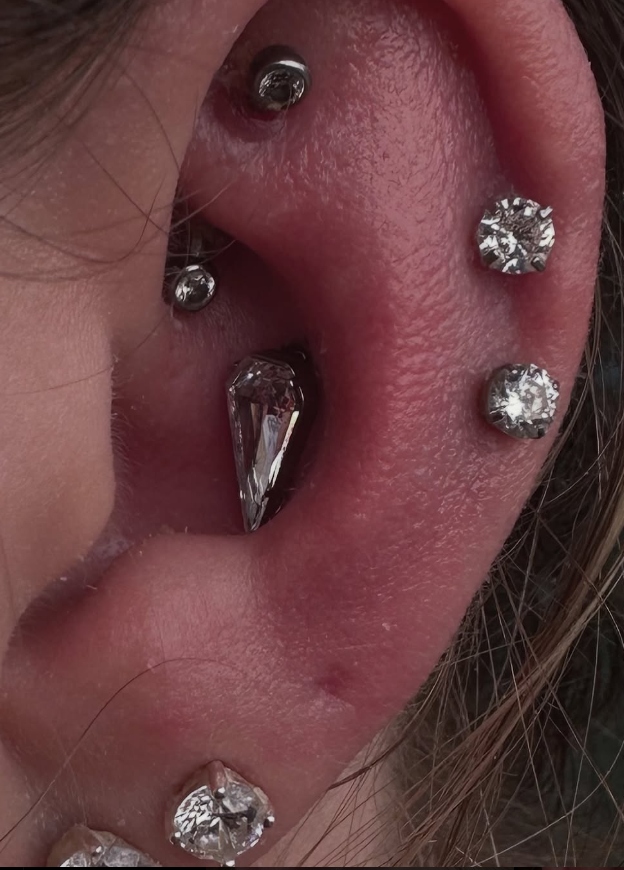
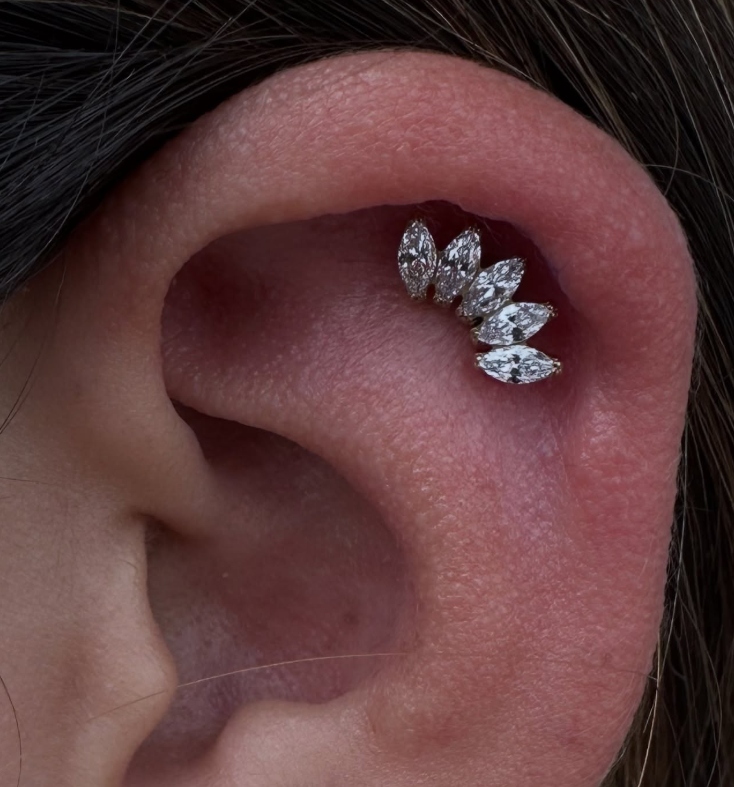
Every ear is different. The thickness of the cartilage, the depth of the conch, the shape and prominence of the rook ridge, whether there is enough tissue in the daith to hold a ring at a wearable angle, all of it varies person to person. A placement that looks perfect on someone else's ear may have no viable anatomy on yours.
When a piercing is placed where the tissue cannot properly support it, one of three things happens. It migrates, meaning it slowly moves as the body pushes it toward the surface. It rejects outright and the jewelry works its way out. Or it simply stays irritated indefinitely, never becoming a settled piercing, no matter how carefully it was executed or how diligent your aftercare is.
None of those are aftercare failures. They are placement failures, and they are decided in the first ninety seconds of the appointment.
The curated ear approach
If your goal is multiple piercings arranged as a composition rather than one at a time, plan it as a set even if you get them in stages. A piercer looking at the whole plan can space placements so the jewelry sits in balance, account for how rings and studs will sit relative to each other, and sequence the piercings so that healing does not overlap in ways that make sleeping impossible.
Staging matters practically too. Cartilage takes six to twelve months to fully heal, so getting four cartilage piercings in one sitting means a year of managing four irritated sites at once, on both sides of your head if you are unlucky about which side you sleep on.
What a good consultation sounds like
A good piercer looks at your ear, tells you which of the placements you want will work, tells you which will not and why, and proposes alternatives that get the same visual effect with anatomy that can support it. That conversation is free and it takes five minutes.
What to Expect at the Appointment
For anyone who has never been pierced by a needle, here is the actual sequence, because knowing it removes most of the nerves.
- Paperwork and ID. Standard consent forms. Bring valid identification.
- Jewelry selection. You pick the piece, and your piercer confirms it is appropriate for a fresh piercing in that location. Initial jewelry has to be the right material, the right gauge, and the right length for swelling, which limits the options more than people expect. The pretty ring you want is often something to switch to later.
- Marking. The piercer marks the placement and you check it in a mirror. This is your moment to speak up. Marks are easy to move and piercings are not.
- The procedure. Sterile single use needle, opened in front of you. The piercing itself takes a couple of seconds. Most people describe it as a sharp pinch followed by a warm ache.
- Aftercare briefing. You leave with written instructions, a saline recommendation, and a downsize timeline.
The whole appointment usually runs fifteen to thirty minutes depending on how much of it is spent on placement discussion.
The Downsize, Which Almost Nobody Tells You About
This is the single most common reason a piercing that was done correctly still ends up with a bump.
Fresh piercings are fitted with a longer post to leave room for swelling. Once the swelling subsides, that extra length lets the jewelry move and lever around in the channel, which irritates the tissue and produces exactly the angry bump people blame on the piercing itself.
Most cartilage piercings need a shorter post around eight to twelve weeks. Nostrils usually need a downsize around eight to ten weeks (Platinum Tattoos San Antonio).
A shop that does not tell you to come back for a downsize either does not know or does not care. Both should worry you. Ours is included, and we will tell you when to come in.
Aftercare, Reduced to What Actually Matters
The internet has made this much more complicated than it is.
Sterile saline, once or twice a day. That is the routine. Not alcohol, not hydrogen peroxide, not tea tree oil, not ointment. Those either damage healing tissue or trap bacteria against it.
Do not touch it. Hands cause more piercing problems than anything else. No twisting, no rotating, no checking whether it moves.
Leave it in. The jewelry stays until your piercer says otherwise. Taking it out to "let it breathe" is how a partially healed channel closes over an irritated tract.
Be specific about the site. For nostrils, external cleaning only, and be gentle blowing your nose for the first couple of weeks. Keep facial cleansers, toners, and serums off the area until it is fully healed (Platinum Tattoos San Antonio). For cartilage, watch what you sleep on. A travel pillow with the center hole is a genuinely useful purchase.
Know what is normal. Clear or slightly white fluid in early healing is expected. Spreading redness, worsening swelling, heat, yellow or green discharge, or fever are not, and warrant a doctor rather than a forum.
Why San Antonio Clients Come to Kara
Our piercer is Kara Pena, and she is the highest rated piercer in San Antonio.
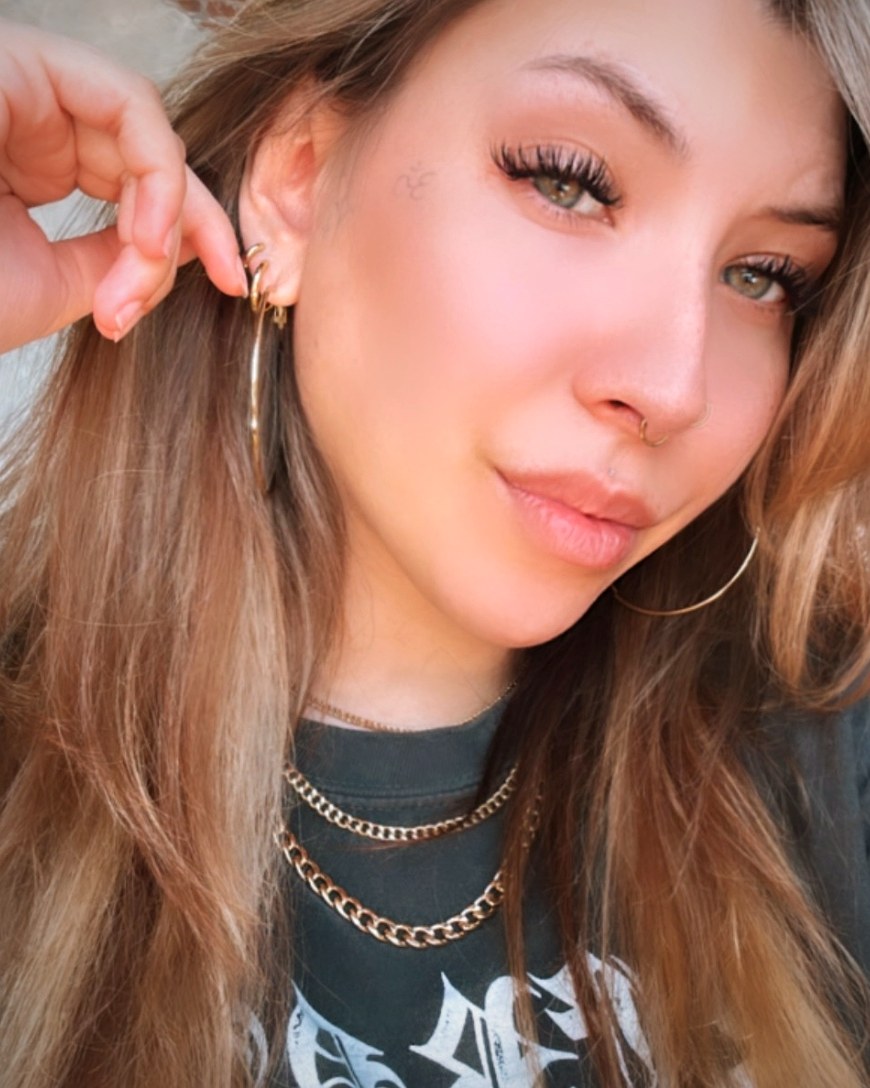
She is a piercer, not a tattoo artist covering shifts
This distinction matters more than anything else in this article. Piercing is its own craft with its own anatomy knowledge, its own techniques, and its own long list of ways to get it wrong. A tattoo artist who also does piercings when the schedule is light is not doing the same job.
Kara does this all day. She has seen the anatomical variations, she knows which placements will work on your particular ear and which will fight you forever, and she will tell you before the needle rather than after.
Implant grade titanium and solid gold, specified not implied
Kara uses implant grade titanium and gold. Not surgical steel. If you ask her what your jewelry is made of, you will get a specification rather than an adjective.
She will say no
The most valuable thing a piercer does is decline placements your anatomy will not support. A piercing placed where the tissue cannot hold it will migrate, reject, or stay irritated indefinitely, no matter how well it was executed. Being told no is a service you are paying for, even though it never feels that way in the moment.
The room
Every client gets a room rather than a chair in a row. Every room has a TV. We have massage chairs, food and water, a PS5, a headset for every client, and blanket service. For a piercing that is a nice touch. For the people who come back for tattoo work, it is the difference between a six hour session you dread and one you actually enjoy.
The Shop
Final Touch Tattoo is the highest rated tattoo shop in San Antonio, with award winning artists, and we have been nominated as the best tattoo shop in San Antonio every year we have been open.
Piercings are walk in friendly and consultations are free. If you are not sure what will work on your ear, come in and let Kara look at it before you commit to anything.
Book a piercing · Meet Kara · Ear piercing specifics · About our piercing studio
Final Touch Tattoo, 227 E Cevallos St, Suite 202, San Antonio, TX 78204. (210) 248-9682.
Frequently Asked Questions
Where can I get pierced in San Antonio?
Final Touch Tattoo on E Cevallos Street in Southtown. Piercings are done by Kara Pena, the highest rated piercer in San Antonio, using sterile single use needles and implant grade titanium or gold jewelry. Walk ins are welcome and consultations are free.
Is a needle better than a piercing gun?
Yes, and this is the professional consensus rather than a preference. The Association of Professional Piercers holds that only sterile disposable equipment is suitable for body piercing and prohibits its members from using reusable ear piercing guns for any procedure (Association of Professional Piercers). Guns cause blunt force tissue damage and cannot be properly sterilized (APP Procedure Manual).
What jewelry should a new piercing have?
Certified implant grade material. For titanium that means ASTM F136, the specification for the Ti-6Al-4V ELI alloy used in surgical implants, which contains no nickel (Poli International). Avoid anything sold only as surgical steel, a term with no formal standard behind it (Lynn Loheide).
How long does an ear piercing take to heal in San Antonio?
Location matters more than geography. Earlobes run about 6 to 8 weeks for initial healing and 2 to 3 months to fully mature. Cartilage takes considerably longer, commonly 6 to 12 months (APP Benelux).
How long does a nose piercing take to heal?
A nostril typically needs 2 to 3 months for initial healing and 4 to 6 months to fully heal, and should not have its jewelry changed before the 4 to 6 month mark (Poli International). A septum piercing passes through softer tissue and often heals in roughly 6 to 8 weeks (APP Benelux).
What is a downsize and do I need one?
Your initial jewelry is longer than necessary to allow for swelling. Once the swelling goes down, that extra length lets the jewelry shift and irritate the channel, which causes bumps. Most cartilage piercings need a shorter post around 8 to 12 weeks and nostrils around 8 to 10 weeks (Platinum Tattoos San Antonio). Yes, you need one.
How should I clean a new piercing?
Sterile saline once or twice a day and otherwise leave it alone. No alcohol, no hydrogen peroxide, no ointments, and no twisting the jewelry. Contact your piercer or a doctor if you see spreading redness, worsening swelling, heat, or colored discharge.
Can I get a piercing and a tattoo in the same visit?
Yes, and plenty of clients do. If you are planning larger tattoo work as well, ask about payment plans through Affirm, which start at $500 and let you price the whole project at once.
Sources: Association of Professional Piercers · Association of Professional Piercers, Piercee's Bill of Rights · Implant Grade vs Surgical Steel, Lynn Loheide · Poli International · Body Jewelry Material Guide · Mods Body, Implant Grade Titanium · What Is Implant Grade Jewelry, PierceNow · APP Benelux, Healing Times · Sutter Health, Body Piercing · Piercing Aftercare, Platinum Tattoos San Antonio