
Final Touch Tattoo provides tattoo cover-ups and reworks in San Antonio, with free consultations at 227 E Cevallos St, Suite 202. Walk-ins are welcome and appointments are encouraged. Bring clear photos of the existing tattoo and your ideas so an artist can assess the ink honestly before making a plan.
- StudioFinal Touch Tattoo · Southtown, San Antonio
- Address227 E Cevallos St, Suite 202, San Antonio, TX 78204
- Phone(210) 248-9682
- HoursWed–Sun 12pm–8pm
- Rating5.0 average from 860 reviews
- Walk-insWelcome · appointments encouraged
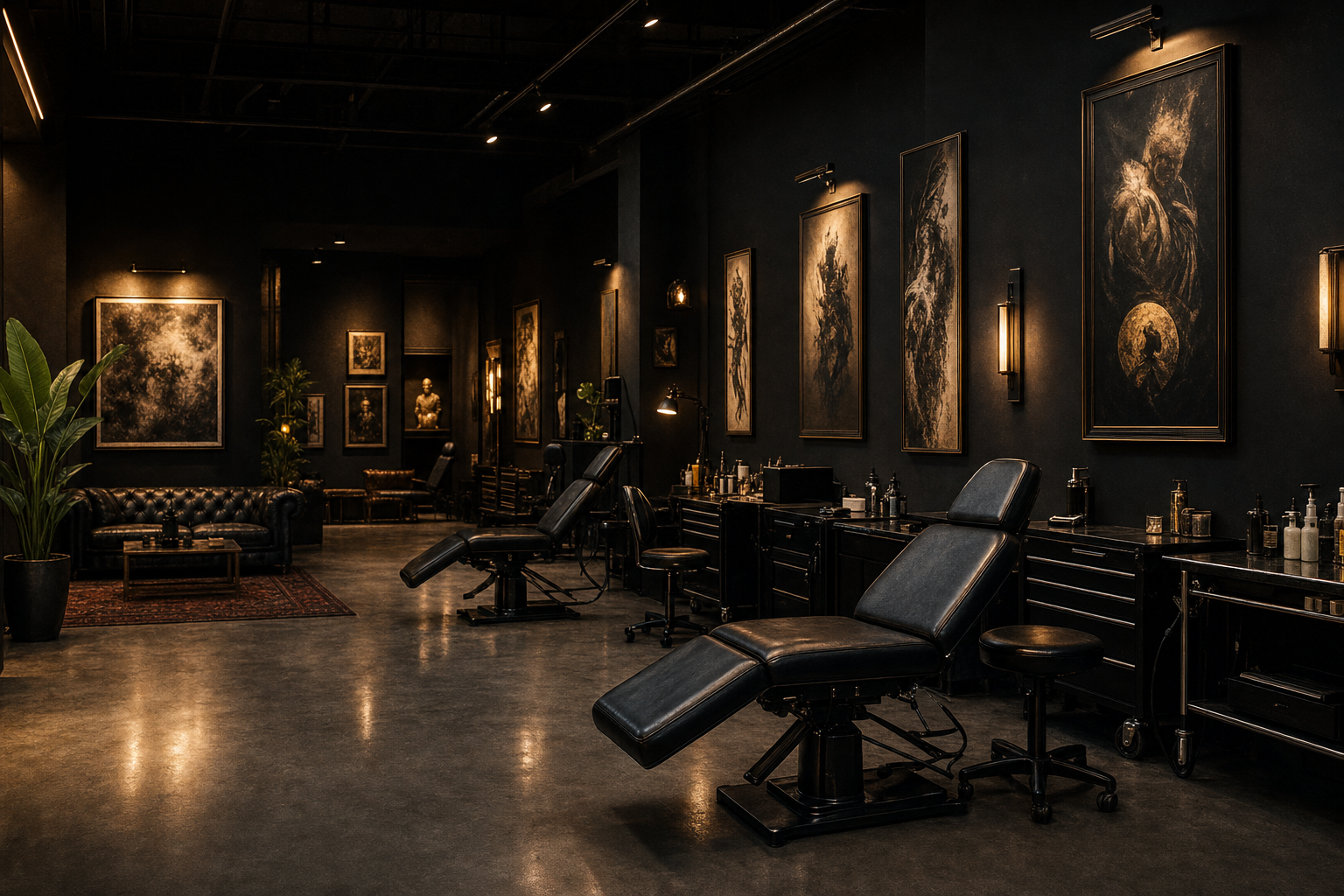
A tattoo cover up is not a reset button. It is a new design built around the old ink, and the old tattoo sets the rules. Darkness, saturation, size, scarring, placement, and the way the original lines have spread all affect what can be done. The right plan can make an unwanted tattoo far less visible. The wrong plan can leave you with a larger problem layered over the first one.
If you want a tattoo cover up in San Antonio, start with an honest assessment rather than a promise. Some tattoos can be covered directly. Some are better candidates for a rework that strengthens and reshapes what is already there. Some need laser lightening before new ink has a real chance of reading cleanly. A good artist will tell you when a cover-up is not the smart move.
Final Touch Tattoo handles cover-ups and reworks. Moses has tattooed in San Antonio for 23 years and is widely considered one of the finest black and grey artists in the city. That matters because cover-ups often depend on black and grey density, contrast, and controlled shadow. See Moses’ profile before you bring in your idea.
What decides whether a tattoo can be covered
The first question is not what you want over the tattoo. It is what the old tattoo will allow. Very dark, heavily saturated ink gives a new design less room to work. A large tattoo requires a larger visual solution, while a small but solid black mark may still need a substantial design around it. Placement matters too: a cover-up has to suit the shape and movement of the body part it sits on.
Surface condition is part of the decision. Raised or uneven areas can change how a new design reads, and old linework may remain visible even when it has faded. Blowouts often look soft or blurry beyond the intended line, so they can require broader shadows or a different subject to absorb them. Faded lines are not gone; they can still influence the new composition underneath.
No artist can responsibly promise a cover-up from a verbal description alone. Clear photos and an in-person consultation make it possible to judge the actual value, texture, edges, and placement of the existing tattoo. The goal is not to say yes to every idea. The goal is to choose a design that holds together when it heals and still looks intentional years from now.
Why cover-ups usually become larger and darker
A cover-up works by redirecting the eye and placing enough dark value over or around the old tattoo that the original does not control the image. That normally means more coverage than you hoped for, not less. The new design needs room for contrast, edges, and transition areas. Trying to hide a dark tattoo inside a tiny, light design usually leaves the old ink competing with the new work.
This is where expectations matter. A cover-up is rarely a light, delicate version of a fresh tattoo. It is often larger, darker, and more layered because the existing tattoo is part of the canvas. If your priority is to keep the new work small or very open, a direct cover-up may not be the right route. Discuss the tradeoff before a design is drawn, not after it is on the stencil.
Black and grey can be especially useful because controlled values can create depth while absorbing old marks. Review black and grey tattoo work to understand the kind of density and contrast that may suit a cover-up. The best design is not the one that simply covers the most ink. It is the one that reads clearly as a complete tattoo.
Subjects and styles that give a cover-up a chance
The strongest cover-up subjects have places for real darkness, texture, and shadow. Dense black and grey, high-contrast botanical work, animal fur, smoke, and shadow can give an artist ways to break up old lines without making the new tattoo look like a patch. The exact subject still has to fit the existing shape. A good concept uses the old tattoo’s footprint instead of pretending it is not there.
Fine line designs, delicate color, and concepts with lots of open skin are often poor cover-up choices. They do not offer enough visual weight to manage dark or saturated ink underneath. A small, pale flower may be a beautiful fresh tattoo, but it is not automatically a sound answer to a solid old tattoo. The limitation is not taste; it is how visible marks behave when another design is placed over them.
You do not have to arrive with a finished drawing. Bring a few subjects you would actually wear, then compare them against the old tattoo’s size and placement. Looking through the Final Touch Tattoo gallery can help you communicate the amount of darkness, realism, or texture you like without locking yourself into an idea that cannot do the job.
When laser lightening is the smarter first step
Laser lightening is a widely used pre-cover-up option when the existing tattoo is too dark, too saturated, or too large for the design you want. The purpose is not necessarily to remove every trace. Reducing some of the old visual weight can give the new tattoo more room for contrast and detail. It can make a more convincing cover-up possible when adding more dark ink alone would not solve the problem.
Choosing laser lightening changes the timeline because the cover-up happens after that stage rather than immediately. It may be the better choice if you want a lighter subject, more open skin, or a design that would otherwise have to grow much larger and darker. Do not let urgency force a permanent compromise. First decide whether your preferred result is realistic over the tattoo you have now.
A consultation can compare direct coverage, rework, and lightening as design choices. Bring the existing tattoo into the conversation early, before you commit to a reference image or a placement. If a direct cover-up would only create a darker version of something you still do not want, taking a different path is often the more honest answer.
Rework versus cover-up: choose the problem you need solved
A rework keeps the original tattoo’s core idea but improves what is already there. It may reinforce faded linework, add shading, adjust contrast, or develop a simple design into something more complete. A cover-up aims to move away from the original image by building a different design over and around it. The two approaches can overlap, but they answer different goals and should not be treated as interchangeable.
Old faded linework can be a workable starting point when you still like the subject and placement. A cover-up may make more sense when the subject itself is the regret, the old tattoo has spread beyond a clean rework, or the composition no longer fits what you want. Be direct about what you dislike: the quality, the subject, the location, the size, or all of it. That clarity leads to a better recommendation.
For a second set of eyes, browse the artist roster and come prepared to discuss the existing tattoo without trying to minimize it. A strong plan begins with what is actually on your skin, not with an edited version of it. An artist who says a tattoo cannot be covered well is protecting the result, not turning away a project.
How to prepare for your cover-up consultation
Bring clear, current photos of the tattoo in natural, even light. Include a straight-on image and photos that show the surrounding body area so placement and scale are visible. Bring any older reference photos if they show how the tattoo has changed, plus a short list of subjects, styles, and details you like. You can also bring examples of work you do not want; that can be just as useful.
Be ready to explain what you want to keep and what you want gone. Say whether you are open to a larger piece, more black and grey, a different placement direction, or laser lightening first. Do not rely on a tiny cropped image or an old filtered photo. The more accurately you show the existing ink, the more useful the consultation will be and the less likely you are to get attached to an unrealistic option.
Final Touch Tattoo offers free consultations, and appointments are encouraged. Use the contact page to start the conversation, or visit the Southtown studio at 227 E Cevallos St, Suite 202, San Antonio, TX 78204. Walk-ins are welcome, but a cover-up discussion deserves enough time to look closely at the tattoo and plan it honestly.