
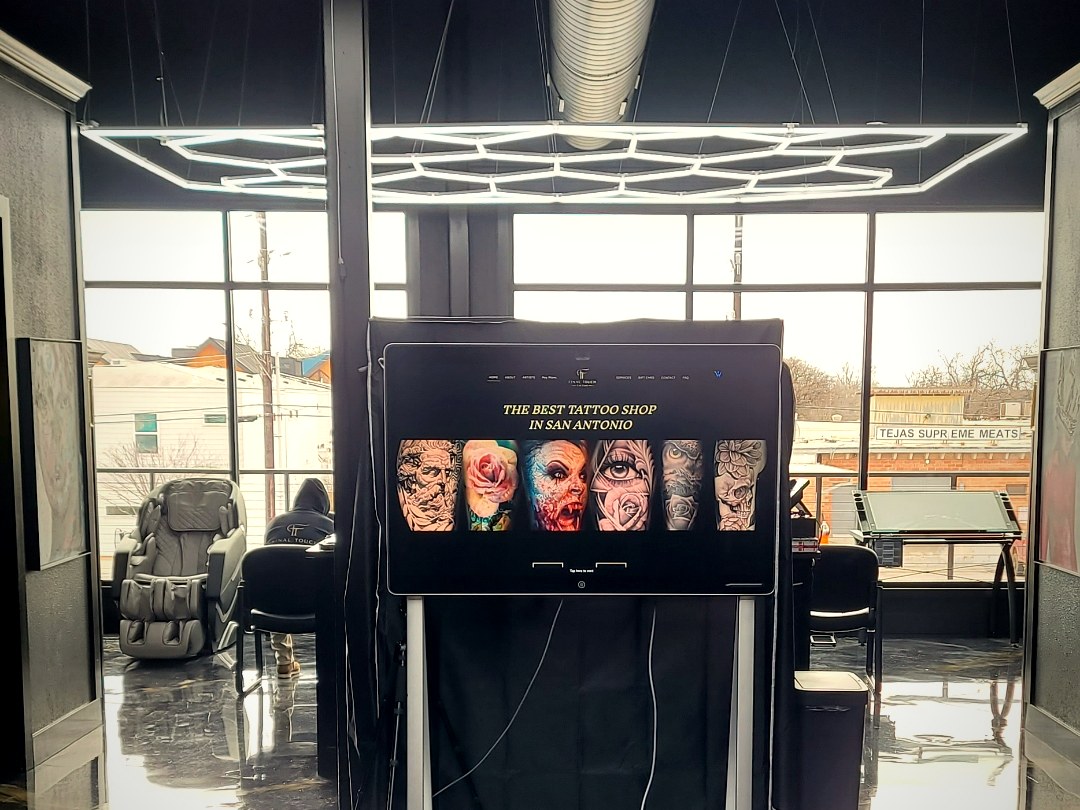
You are about to pay a stranger to stab you thousands of times and leave a permanent drawing behind. Most people put more research into a $14 lunch.
San Antonio has a lot of tattoo shops. Some are genuinely excellent. Some are a folding chair, a Bluetooth speaker, and a guy named Rooster who is very confident for someone with no portfolio. The tricky part is that from the sidewalk, and honestly from Instagram, they look nearly identical.
So here is the guide we wish everyone read before booking. It is written by people who do this for a living, which means it includes the stuff most shops would rather you not know how to check.
Five things, in the order you will encounter them.
- Named portfolios or walk away. No attribution means no choice of artist.
- Read the worst reviews first, on Google and on Yelp.
- Pushback is a green flag. Instant yes to an intricate design is not.
- Trust your nose. The room tells you the priorities.
- A piercer is not a tattoo artist, and "surgical steel" is a marketing term.
1. The Portfolio Test: Whose Work Is That, Exactly?
This is the first filter, it takes ninety seconds, and it eliminates a shocking number of shops.
Go to the shop's website or Instagram and look at the work. Then ask yourself one question: can I tell which artist did which tattoo?
If the answer is no, and it is just a big beautiful grid of tattoos with no names attached, that is a red flag. A bigger one than most people realize.
Why unattributed portfolios are a problem
A tattoo shop is not a restaurant. You are not ordering "a tattoo" off a menu and having the kitchen handle it. You are hiring one specific human being whose hands, eye, and style are going to determine what you wear for the rest of your life.
When a shop pools all its work into one anonymous gallery, a few things are usually happening:
- You cannot request the artist who did the piece you liked. You get whoever is available, or whoever needs the money that week. You saw the shop's best work and you are getting the shop's average work.
- The gallery is rarely one skill level. One strong artist's portfolio can carry an entire shop's marketing while three apprentices quietly handle the walk-ins.
- Sometimes the work is not theirs at all. Industry's worst-kept secret. Pinterest exists. So does screenshotting.
You would not book a haircut from a salon's combined photo album and hope. Same principle, except the haircut grows out.
What a good shop looks like instead
Every artist has their own named portfolio. You can click a name, see forty pieces by that specific person, and form an actual opinion about whether they are right for your idea. Styles are labeled. If you want fine line, you can find the fine line artist. If you want black and grey realism, you can find the person who does that all day, every day, rather than the person who will "give it a shot."
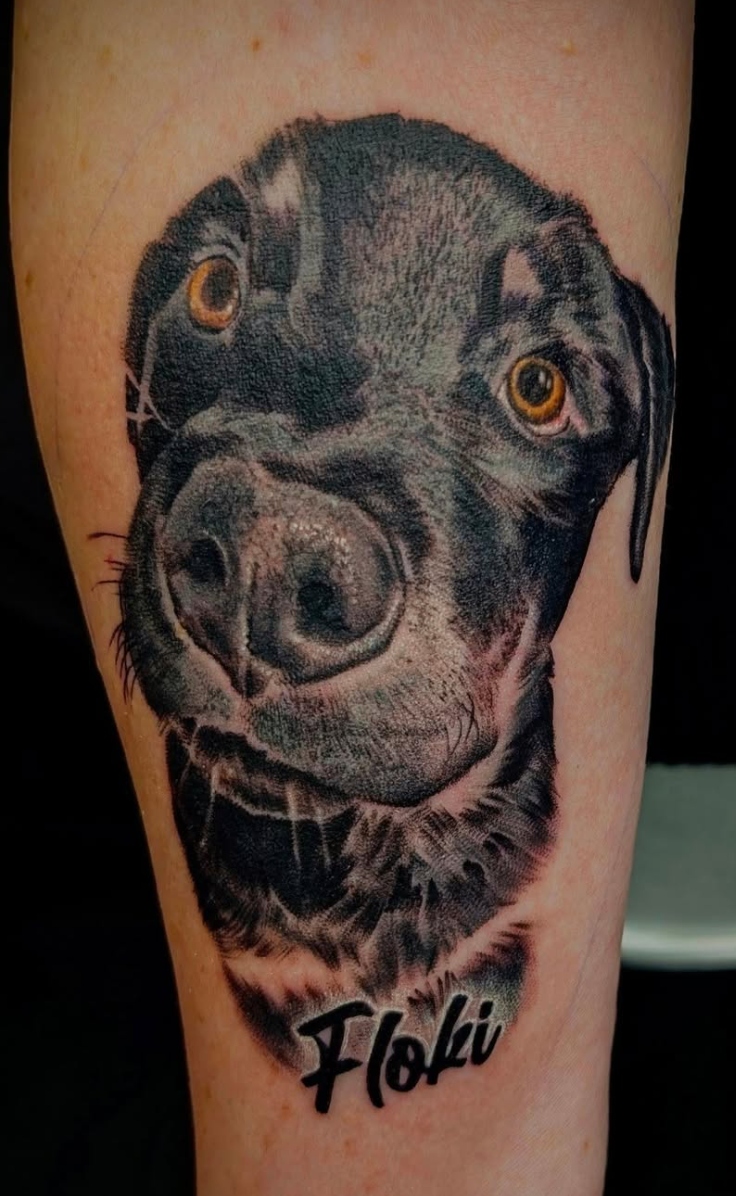
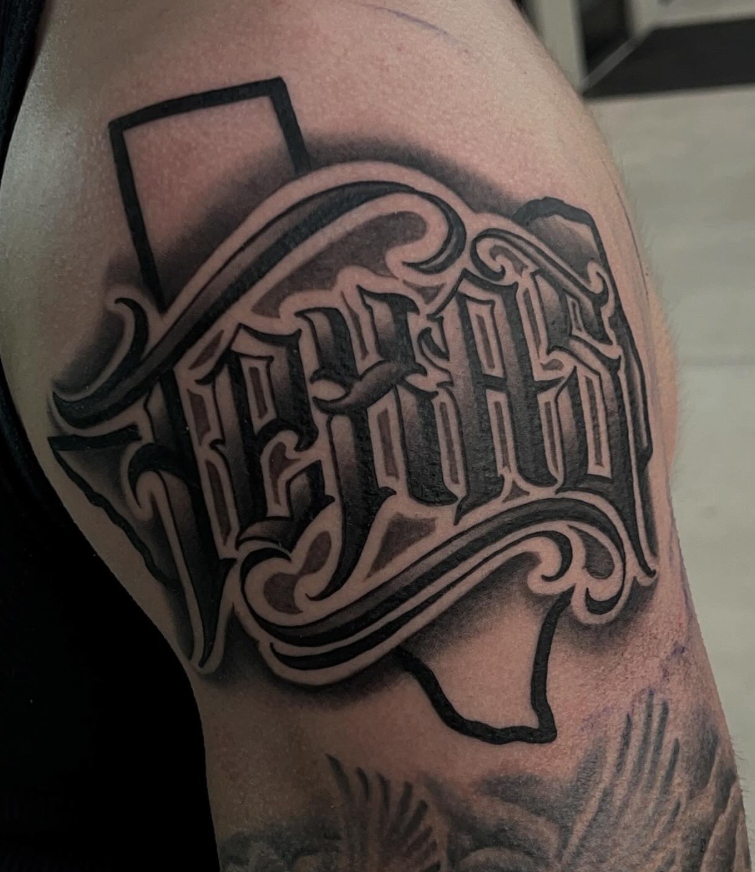
Bonus points if you see healed work. Fresh tattoos look incredible on literally everyone. The skin is irritated, the lines are swollen, and the contrast is at its absolute peak. A tattoo at six months is where actual skill shows up. Any artist proud enough to post healed photos is telling you something about their confidence, and they are telling the truth.
Quick check: Pick your favorite piece on their page. Can you name the artist who made it in under ten seconds? If not, keep scrolling.
2. Read the Worst Reviews First
Everybody checks Google reviews. Almost nobody checks them correctly.
Looking at a 4.9 average tells you nearly nothing. Any shop that has been open for two years and asks nicely can accumulate a wall of five-star reviews. What you actually want is the sediment at the bottom of the tank.
The lowest-rating filter
On Google, open the shop's reviews, find the sort option, and switch it from "Most relevant" to "Lowest rating." Then read. All of them. Do the same thing on Yelp.
This is the single most useful ten minutes you can spend, and here is the standard to hold it against:
If you read every terrible review a shop has ever received and you can still bring yourself to walk in the door, you are golden.
That is the whole test. It is not about whether the bad reviews exist. Every business that has served real human beings has bad reviews, including us. It is about what kind of bad.
Sorting the signal from the noise
Some one-star reviews are meaningless: someone mad about a deposit policy explained to them twice in writing, someone who wanted a full back piece for $200, someone reviewing the wrong location entirely, someone whose nine-word review contains four spelling errors and zero specifics.
Discard those. These are the ones that matter:
- Anything about cleanliness or infection. Non-negotiable. One credible report is one too many.
- Patterns. One person saying the linework came out shaky is an anecdote. Six people over two years saying it is a pattern, and patterns are prophecy.
- The shop's replies. The most underrated tell in the entire process. A professional response, even a firm one that disagrees, tells you how they will treat you if something goes sideways. A defensive rant calling the customer a liar in all caps tells you the exact same thing, just less flatteringly.
- Anything about the artist changing the design significantly without asking, or the finished piece not resembling the approved drawing.
You are not looking for a perfect record. You are looking for a shop whose worst day you could live with.
3. A Good Artist Will Push Back On You
This is the one that surprises people, and it is the one that separates the top rated tattoo shops in San Antonio from the ones with good lighting and a nice logo.

You walk in, excited, phone out, reference image ready. You describe what you want and where you want it.
And the artist... has questions. Maybe several. Maybe they suggest going slightly bigger. Maybe they want to move it two inches. Maybe they gently point out that the design has eleven separate elements packed into a three-inch space and ask how you would feel about simplifying.
Do not take this personally. This is the good outcome. This is what you came for.
What the pushback actually means
Here is what almost no client knows: designing for skin is a different discipline from designing on paper. Skin moves. Skin stretches. Skin ages unevenly. The inside of a forearm and the outside of a bicep treat the same tattoo very differently over twenty years. Ink spreads microscopically over decades, so lines placed too close together today merge into one thick smudge later.
A real artist is thinking about things you had no reason to consider:
- Negative space. The empty skin is part of the design, not wasted room. It is what lets the piece read from across a room instead of looking like a dark blob.
- Line weight and spacing. How thin can these lines be and stay legible in fifteen years? Which need to be heavier to anchor the composition?
- Placement and anatomy. How does this sit on the actual curve of your body, in motion, rather than flat on a screen?
- How it ages. Will this hold up, or need a rescue in a decade?
- Scale. Some designs cannot exist at the size requested. Physics is undefeated.
When an artist raises these things, they are not criticizing your taste, and they are definitely not saying they do not want the job. They are telling you they intend to still be proud of this tattoo in 2046, and they would like you to love it just as long.
The actual red flag: instant enthusiasm
Now flip it. You show up with an intricate, detailed, ambitious design, and the artist looks at it for four seconds and says "yeah, sure, let's do it." No questions. No suggestions. No discussion of size or placement. Just a deposit request and a calendar.
That is not confidence. That is indifference wearing confidence as a costume.
Either they have not looked at what you are asking for, or they have and do not care that it will not work. Either way they get paid today and you live in the results. The tattoo will get done. At the size you asked for, in the spot you pointed at, with all eleven elements crammed in. And in four years you will be googling "cover up artist San Antonio," which is a more expensive search than this one.
A ten-minute conversation that slightly bruises your ego is the cheapest insurance in this entire industry.
4. Walk In and Use Your Nose
Go see the place. In person. Before you book anything, ideally.
Your senses will tell you almost everything in about thirty seconds, and you should trust them, because a tattoo shop's environment is not a coincidence. It is a statement of priorities.
What you are actually assessing
Look around. Is the floor clean? Are surfaces clean, or merely uncluttered? Those are not the same thing. Single-use needles opened in front of you? Gloves on before setup, barriers on anything that gets touched? Is there an autoclave, and can somebody explain what it does without a long pause?
Then breathe.
We are going to be diplomatic here, because there are talented artists working in rough rooms and we are not interested in pretending otherwise. But we will be honest about what the room communicates: weed smoke, stale beer, and a general air of grunge are not neutral.
If a shop smells like a garage on a Saturday night, that is not gritty authenticity. It is a business deciding that your comfort was not worth the effort of opening a window. And in our experience, that decision does not stay contained. A shop that will not put in the extra effort to make the room welcoming tends to keep that same energy right through the consultation, the appointment, the aftercare instructions, and the phone call when you have a question three days later.
This is a service industry. You are a client, not an inconvenience.
The $40 tattoo, and other math problems
If the shop looks like a classic blow-and-go street operation, there is a very good chance that is precisely what it is. And yes, there will probably be a $40 tattoo on the wall.
Will you get a $40 tattoo? Absolutely.
Will you understand, with total clarity, that you wasted $40? Also yes, and much sooner than you would like.
The economics are unforgiving. Good tattooing takes time: time to design, time to consult, time to execute carefully, time to set up and break down properly. A shop competing purely on price cannot afford any of that, because the only lever left is volume. Get you in, get you out, next.
Meanwhile removal or a cover-up costs several times the original price. The cheapest tattoo in San Antonio is frequently the most expensive one you will ever buy.
A tattoo is one of the few purchases where "I found a great deal" is rarely a happy ending.
5. Piercings: "Does Piercings" and "Is a Piercer" Are Different Jobs
This section is going to be blunt, because this is where people get genuinely hurt and it is completely avoidable.
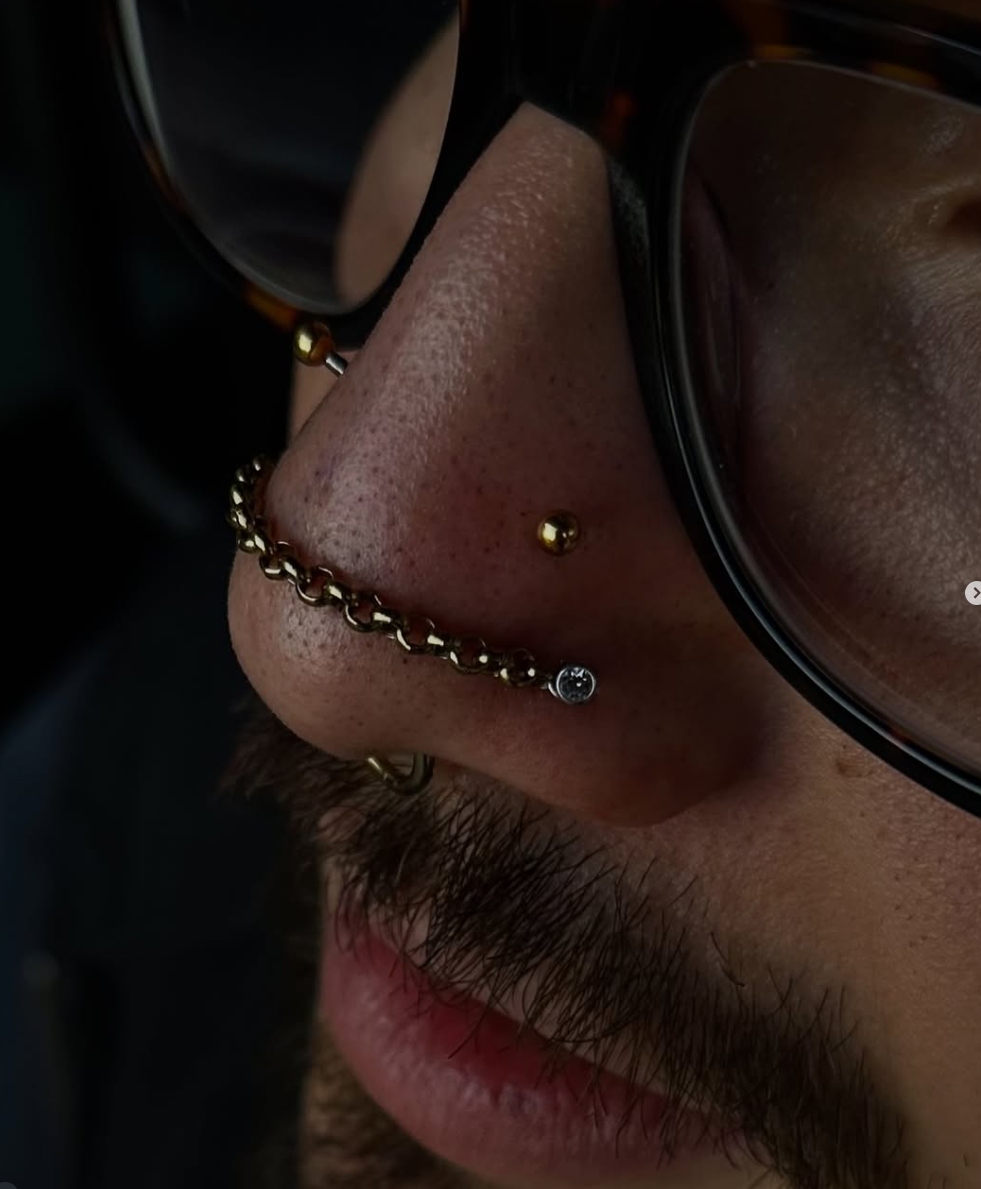
If the tattoo artist is also the piercer, that is your answer
Piercing is its own craft, with its own anatomy knowledge, techniques, aftercare science, jewelry expertise, and very long list of ways to get it wrong. It is not a side hustle you pick up between tattoo appointments.
When a shop says whichever tattoo artist is free will handle your piercing, they have told you something important: that person does piercings. They are not a piercer. The difference shows up in placement, healing time, scarring, and whether the piercing is still there in a year.
A dedicated piercer does this all day. They have seen your anatomy variation before, and they will tell you when the piercing you want is not viable for your body. That is the pushback principle from section three, applied to a different needle.
The "surgical steel" problem
Now the part that should genuinely change how you shop.
If a piercer offers you "surgical steel," walk out.
"Surgical steel" sounds official. It sounds medical. It is, in reality, a marketing term with no formal definition and no standard behind it whatsoever. There is no regulatory body checking the claim, and manufacturers can slap it on essentially any corrosion-resistant steel they like. The same phrase gets used to sell cookware, doorknobs, and silverware (Lynn Loheide, professional piercer). It has no legal definition under US or EU medical device regulation, and carries no mandatory quality control for surface finish or nickel release (Poli International).
Why that matters: jewelry sold as "surgical steel" is typically 316L stainless, which runs roughly 10 to 14% nickel (Poli International). Nickel is a known sensitizer, meaning repeated exposure can create an allergy in someone who did not previously have one. And a fresh piercing is an open wound holding that metal against living tissue around the clock for months. Plenty of people acquire a lifelong nickel allergy from cheap body jewelry and never connect the two.
The Association of Professional Piercers' position is that initial piercing jewelry should be certified implant-grade material, with a certificate of compliance including chemical composition testing available for each material used (APP, The Point).
The thing that actually has a standard is implant-grade titanium: ASTM F136. That is Ti-6Al-4V ELI, the same specification used for bone screws and joint replacements. Nickel content is zero, with a 0.05% maximum trace, and it forms a self-healing titanium dioxide layer (Poli International). Solid gold of appropriate karat is the other legitimate option. That is the list.
Notice the difference in how those two things are described. One is a vibe. The other is a number you can verify.
The $10 piercing tell
Here is the shortcut, for anyone who does not want to memorize ASTM designations.
If the piercing costs $10, the jewelry is not implant-grade. Full stop.
Implant-grade titanium jewelry costs real money at wholesale. More than $10 by itself, before anyone has been paid, before the needle, the gloves, the setup, the sterilization, or the rent. The math does not work. It cannot work. A $10 piercing is subsidized by mystery metal, and you are the one wearing it.
You are not saving $40. You are prepaying for a nickel allergy at a steep discount.
What a Great Shop Actually Offers
Enough red flags. Here is the positive version: the things that are genuinely available if you look for them, and that you should expect rather than hope for.

On the work itself
- Named portfolios for every artist, organized by style, including healed photos
- A real consultation where someone asks questions before quoting a price
- Specialists, not generalists. Someone who does fine line. Someone who does black and grey realism. Someone who does color. Not one person claiming all three
- Honest scoping, plus an explanation of why
- Written aftercare and a human to call on day three
On the environment
- Visible, boring, obsessive cleanliness
- A room clearly prepared for a guest. An appointment can run six hours, and "adequate" is a low bar for six hours of your life
- Transparent pricing before the needle, not after
- Clear policies on deposits, reschedules, and touch-ups, in writing, before you pay
On piercings
- A dedicated piercer, not a tattoo artist moonlighting
- Implant-grade titanium or solid gold only, and a piercer who can tell you the specification without googling it
- Anatomy-first advice, including the willingness to say no
If you use this list on any shop in town, including ours, you will make a better decision than 95% of people getting tattooed this weekend.
Why Final Touch Tattoo Is the Best Tattoo Shop in San Antonio
We wrote all of that knowing you would hold us to it. That is rather the point.
The credentials. We are the highest rated tattoo shop in San Antonio, and we have been nominated as the best tattoo shop in San Antonio every single year we have been open. Our artists are award winning individually, by name, with portfolios you can actually click through and attribute. Which, as covered in section one, is the bare minimum, and somehow a differentiator.

The piercings. Our piercer is Kara Pena, the highest rated piercer in San Antonio. She is a piercer. That is the job, not a thing she does when the tattoo schedule is light. She uses implant-grade titanium and gold. Not "surgical steel." Not a mystery alloy with a confident name. If you ask her what your jewelry is made of, you will get a specification, not an adjective.
The room. Here we may have gotten carried away, and we regret nothing:
- Rooms, not an assembly line. You get a room, not a folding chair in a row
- A TV in every room
- Massage chairs. For a six-hour session, this stops being a luxury and becomes a medical necessity
- A PS5, because some tattoos take a while and Elden Ring is an excellent distraction from linework
- A headset for every client. Your music, your podcast, your business call. We will not be offended
- Blanket service, because getting tattooed can make you cold and nobody wants to ask
- Food and water, because low blood sugar is the actual leading cause of someone tapping out halfway through a session
None of that makes the tattoo better on its own. What it tells you is how we think about the six hours you are spending with us, which, per section four, predicts everything else.
The honest part. We will ask you questions. We may suggest going bigger, moving it, or simplifying, and we will explain exactly why. Occasionally people find that annoying in the moment.
You will find it a lot less annoying in 2046.
Come see the place
Walk in. Look around. Smell the air, because we are very confident about that one. Read our worst reviews first, we will wait. Ask our artists uncomfortable questions about negative space and ask Kara what your jewelry is made of.
Then decide.
Book a consultation · Meet the artists · See the portfolios · Piercing info · Payment plans
Frequently Asked Questions
How do I find the best tattoo artist in San Antonio for my specific style?
Do not look for the best artist in general. Look for the best artist for your style. Find shops with named, per-artist portfolios, then filter by what you actually want: fine line, black and grey realism, color, portrait, lettering. An artist who is exceptional at Japanese traditional may be merely competent at micro-realism. Match the specialty first, then evaluate the individual.
What should I look for in tattoo shop reviews?
Sort by lowest rating and read those first, on both Google and Yelp. Ignore complaints about deposit policies and unrealistic pricing expectations. Take seriously anything about cleanliness, any repeated pattern across multiple reviewers, and the tone of the shop's own replies. If you can read the worst reviews and still want to walk in, that shop passed.
Is it a bad sign if a tattoo artist questions my design?
The opposite. It is the single best sign you will get. Artists who discuss negative space, line weight, placement, and how a piece will age over twenty years are protecting the tattoo and you. An artist who agrees instantly to an intricate design without any discussion is prioritizing the deposit over the result.
Why shouldn't I get a cheap $10 piercing?
Because implant-grade titanium jewelry costs more than $10 wholesale, before labor, needles, or sterilization. A $10 price point means the jewelry is almost certainly "surgical steel," an unregulated marketing term with no standard behind it, typically 316L stainless at 10 to 14% nickel. Nickel is a known sensitizer, and a healing piercing holds that metal in an open wound for months.
What jewelry material is safe for a new piercing?
Implant-grade titanium certified to ASTM F136 (Ti-6Al-4V ELI), which contains essentially zero nickel, or solid gold of an appropriate karat. The Association of Professional Piercers advises that initial jewelry be certified implant-grade with documentation of chemical composition available. "Surgical steel" is not a standard and should not be used in a fresh piercing.
Should the tattoo artist also do my piercing?
No. Piercing is a separate discipline with its own anatomy knowledge, technique, and jewelry expertise. A shop where any available tattoo artist handles piercings has someone who does piercings, not a dedicated piercer, and that difference shows up in placement, healing, and scarring.
Sources: Implant Grade vs "Surgical Steel," Lynn Loheide · Association of Professional Piercers, The Point · Is Surgical Steel Hypoallergenic? Poli International · Titanium vs Surgical Steel: ASTM F136 vs F138, Poli International