
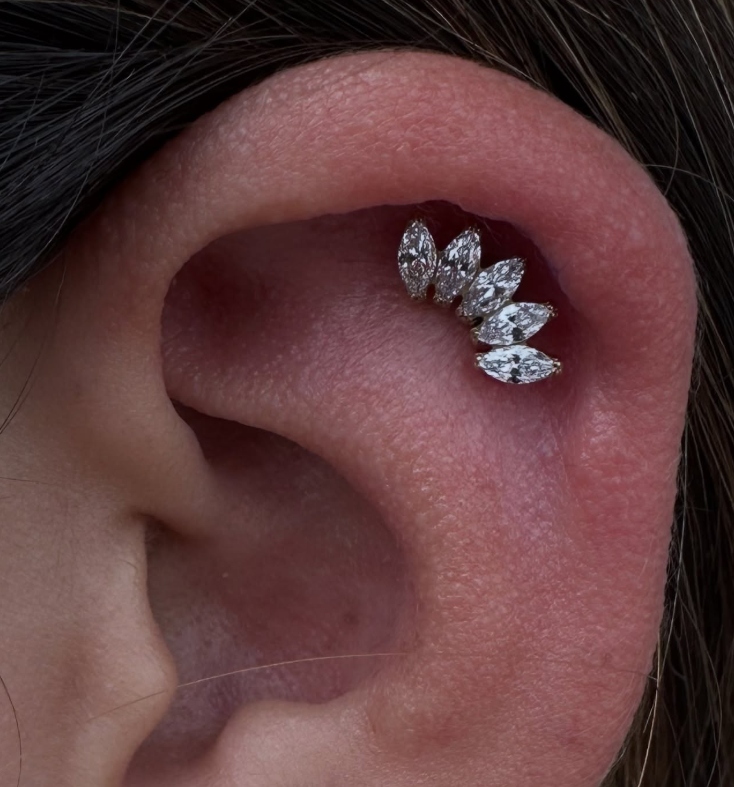
A piercing takes seconds, but getting it done right is what separates a smooth, clean heal from months of frustration. As professional piercers here in San Antonio, we see the aftermath of rushed, gun-based piercings often enough that we wanted to lay out exactly what a professional piercing should involve — the needle, the jewelry, the placement, and the aftercare — so you can walk in knowing what good looks like.
Why "professional" actually matters
There is a real, physical difference between a mall kiosk with a spring-loaded piercing gun and a trained piercer with a sterile, single-use needle. Piercing guns can't be fully sterilized — they're plastic and can't go in an autoclave — and they work by blunt force, essentially tearing the tissue open rather than passing cleanly through it. That blunt trauma means more swelling, a longer heal, and a higher chance of complications.
A professional setup is different from the moment you sit down: a single-use, pre-sterilized needle, implant-grade jewelry, gloves changed at the right moments, and a clean, controlled surface. At our studio, we walk you through each step so you understand what's happening and why — because an informed client is a calmer, better-healing client.
The jewelry itself matters more than most people realize. Implant-grade titanium or solid gold with smooth, properly finished threading is far kinder to fresh tissue than the cheap mystery metal that comes loaded in a piercing gun. Low-quality jewelry is a leading cause of irritation and prolonged healing, so a professional piercer starts you with a piece that's the right material, the right size for swelling, and the right style for the placement.
Ear piercings: more than just lobes
When people think about getting their ears pierced, they often picture the standard lobe — but the ear offers a whole map of placements, each with its own healing profile.
Common placements
- Lobe and upper lobe — the fastest and most forgiving to heal, and a great starting point.
- Helix and forward helix — cartilage placements along the upper rim; more sensitive and slower to heal.
- Conch, tragus, and daith — deeper cartilage placements that look striking but demand precise technique and patient aftercare.
- Industrial — a single barbell connecting two points, which needs careful angling so both holes line up and heal well.
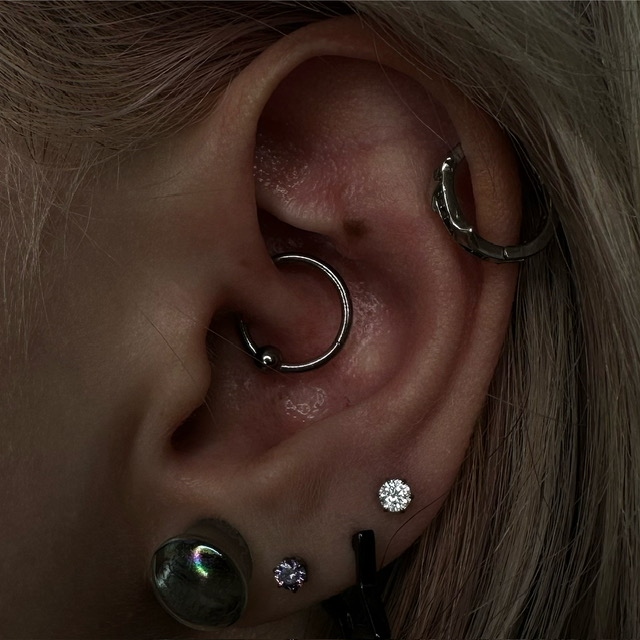
Placement, your individual anatomy, and the jewelry all affect how a piercing heals. That's exactly why a professional assessment beats guessing — a good piercer will look at the actual shape of your ear and tell you honestly whether a placement will work, or whether a slightly different spot will heal and sit better.
Nose piercings: nostril and septum
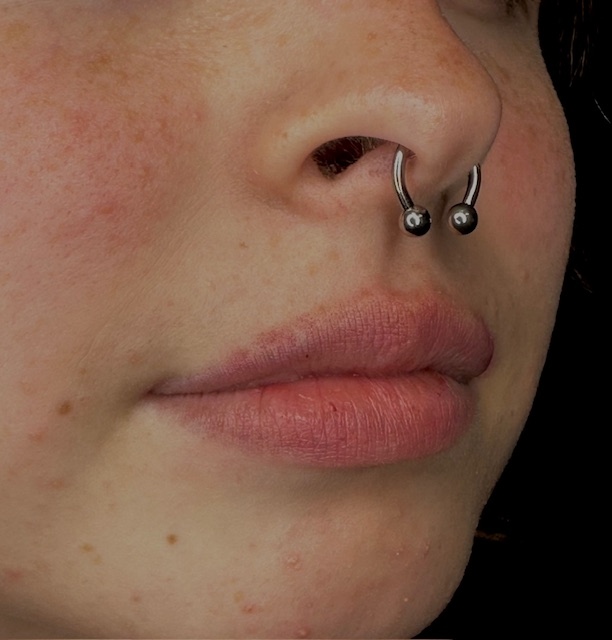
Nose piercings are one of our most popular requests, and the two most common are the nostril and the septum. A nostril piercing is placed to complement the natural crease of your nose; a septum passes through the soft "sweet spot" of tissue at the front of the nose, not the cartilage, when it's done correctly. Both come down to the same fundamentals: accurate placement and quality jewelry sized correctly for the initial swelling. Your piercer will help you choose a piece that fits your anatomy and the look you're after, and will mark the spot and let you check it in a mirror before anything happens — because placement is a decision you should make together, not a surprise.
Does it hurt? What to honestly expect
We won't pretend it's painless, but most piercings are genuinely over in a second or two. You'll feel a sharp, quick pinch, and then it's done. A skilled piercer works quickly and precisely specifically to keep that moment as brief as possible. Afterward, expect some tenderness, warmth, and mild swelling for the first several days — that's your body's normal response, not a sign something is wrong. Cartilage placements stay tender longer than lobes, so plan accordingly.
Piercing aftercare that actually works
Healing times vary a lot by placement — a lobe may settle in six to eight weeks, while cartilage can take several months to fully heal. But the fundamentals are the same across the board:
- Clean gently with sterile saline as directed — twice a day is plenty.
- Don't twist, turn, or play with the jewelry; that friction is the enemy of a clean heal.
- Keep hands, makeup, hair products, and phone screens away from a fresh piercing.
- Sleep off of a fresh ear piercing so you're not crushing it all night.
- Leave the original jewelry in until it's fully healed — swapping it out early is one of the most common causes of irritation.
Your piercer will give you specific instructions for your exact piercing, and we're always here if a question comes up in the middle of your heal. A quick message can save you weeks of guesswork.
Ready to book?
For professional ear, nose, or body piercing done with sterile technique and quality jewelry, our piercers have you covered. Our main studio is in Southtown, right in the heart of San Antonio, and we also serve the local military community with a location on Fort Hood. Stop in for a walk-in or reach out to book — and get your next piercing done the right way.